Hazard Zone Records · Amarillo, Texas · 1978–1986Monitoring channel 19
The Shoulder Lane
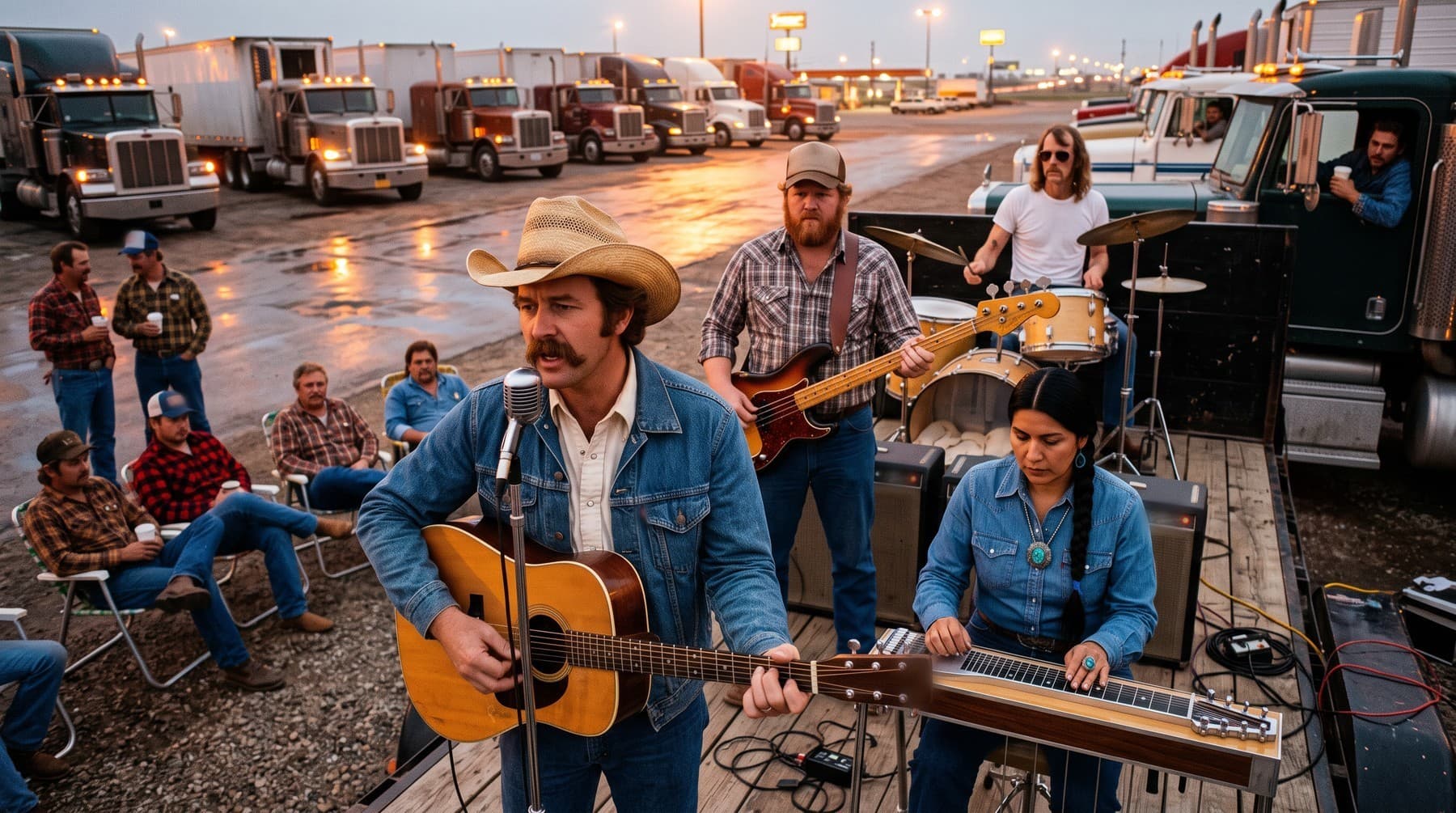
The band playing on a flatbed trailer at a truck stop at dusk, drivers watching from folding chairs and from the cabs of parked rigs
Exit 78
East

The Shoulder Lane

Amarillo, Texas

1978 – 1986

Keep the shiny side up.

Trucker country from the Texas Panhandle. Four records on Hazard Zone Records. Played off the back of a flatbed trailer, at the edge of the lot, to drivers who stayed in their cabs.

The flatbed, east lot, at dusk. The drivers are already parked facing the trailer.

CH 01 · Formation

Seventeen hours, Alpine to Amarillo

Seventeen hours from Alpine to Amarillo, June 1978. Four musicians. No station they could agree on. They became one.

The Shoulder Lane formed in June 1978, at the end of a seventeen-hour drive across West Texas. Four musicians had been hired separately to play a wedding dance in Alpine. They rode home to Amarillo together in Lonnie Fife's van. The trip normally takes six hours. A tire went outside Fort Stockton, and the part took most of a day to arrive.

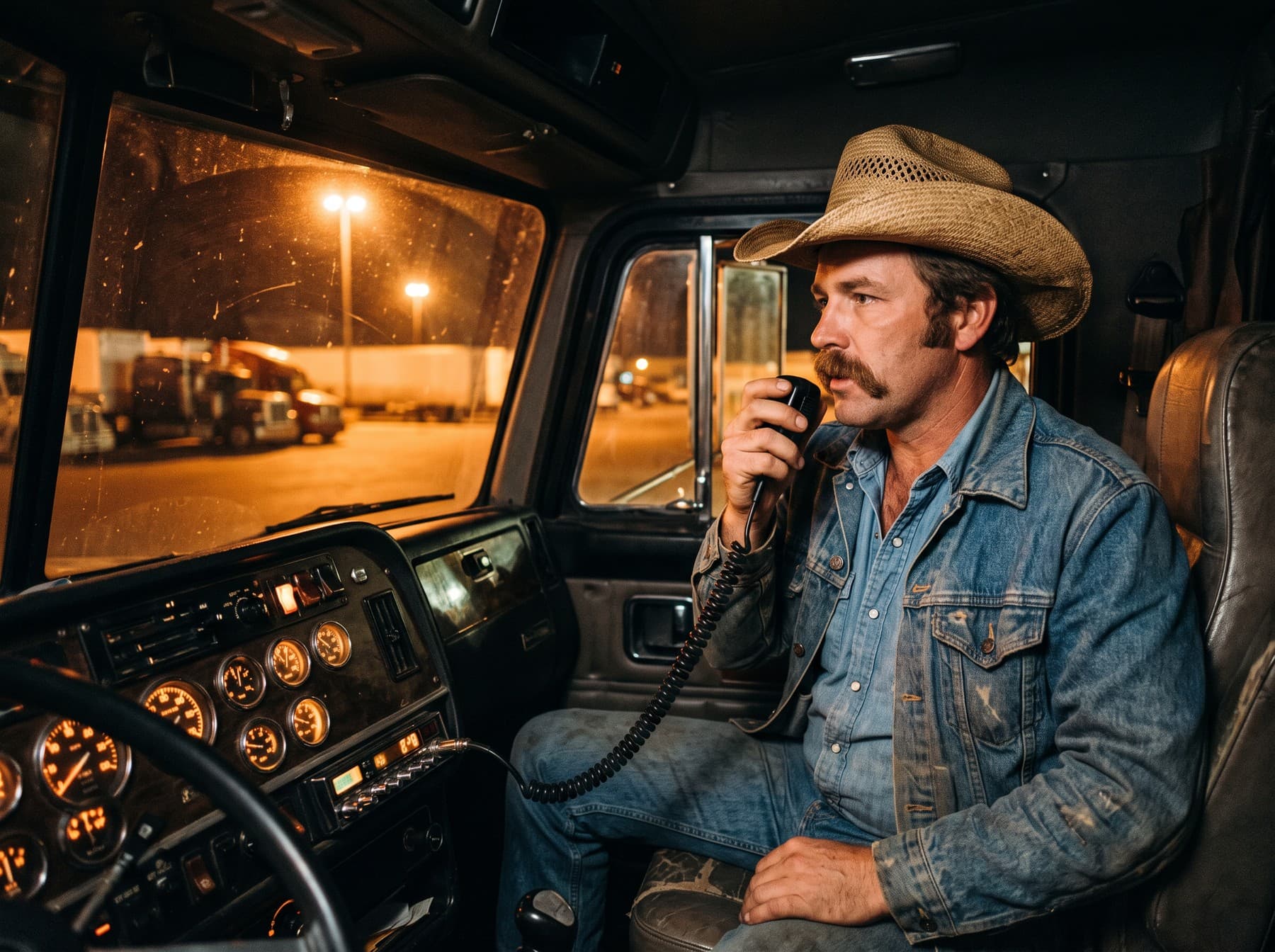
The van had an AM radio. Every station the dial found faded within forty miles, and the four of them did not agree on any of it. Somewhere north of Lubbock, Dee Ochoa switched the radio off. The CB stayed on. For the last three hours they listened to drivers on channel nineteen and sang whatever came to mind. Wade Tolliver, eleven years a long-haul driver, called it the best station in Texas. By the Amarillo city limits there was a band.

On the sleeve

“The high plains had no radio. So we made our own.”

— Wade Tolliver, sleeve of No Radio Signal (1979)
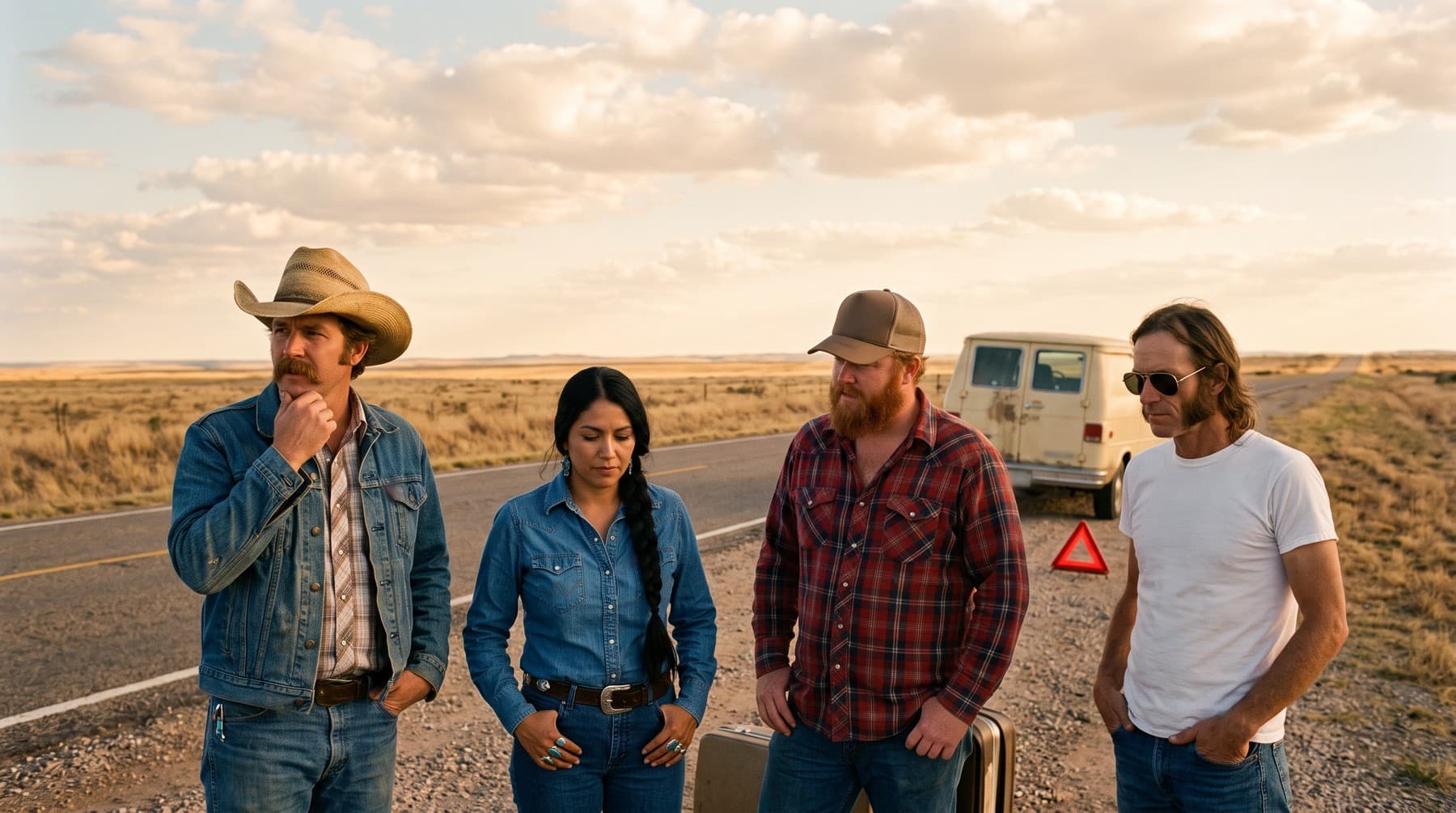
Four musicians standing on the shoulder of a two-lane highway in open grassland, a cream van and a red warning triangle behind them
Outside Fort Stockton, June 1978. Waiting on the part. The band was not yet a band.

CH 02 · The Road

Trip report

The band's history, as entered in the order it happened. Mile markers are the archive's. The road is I-40.

  1. Seventeen Hours

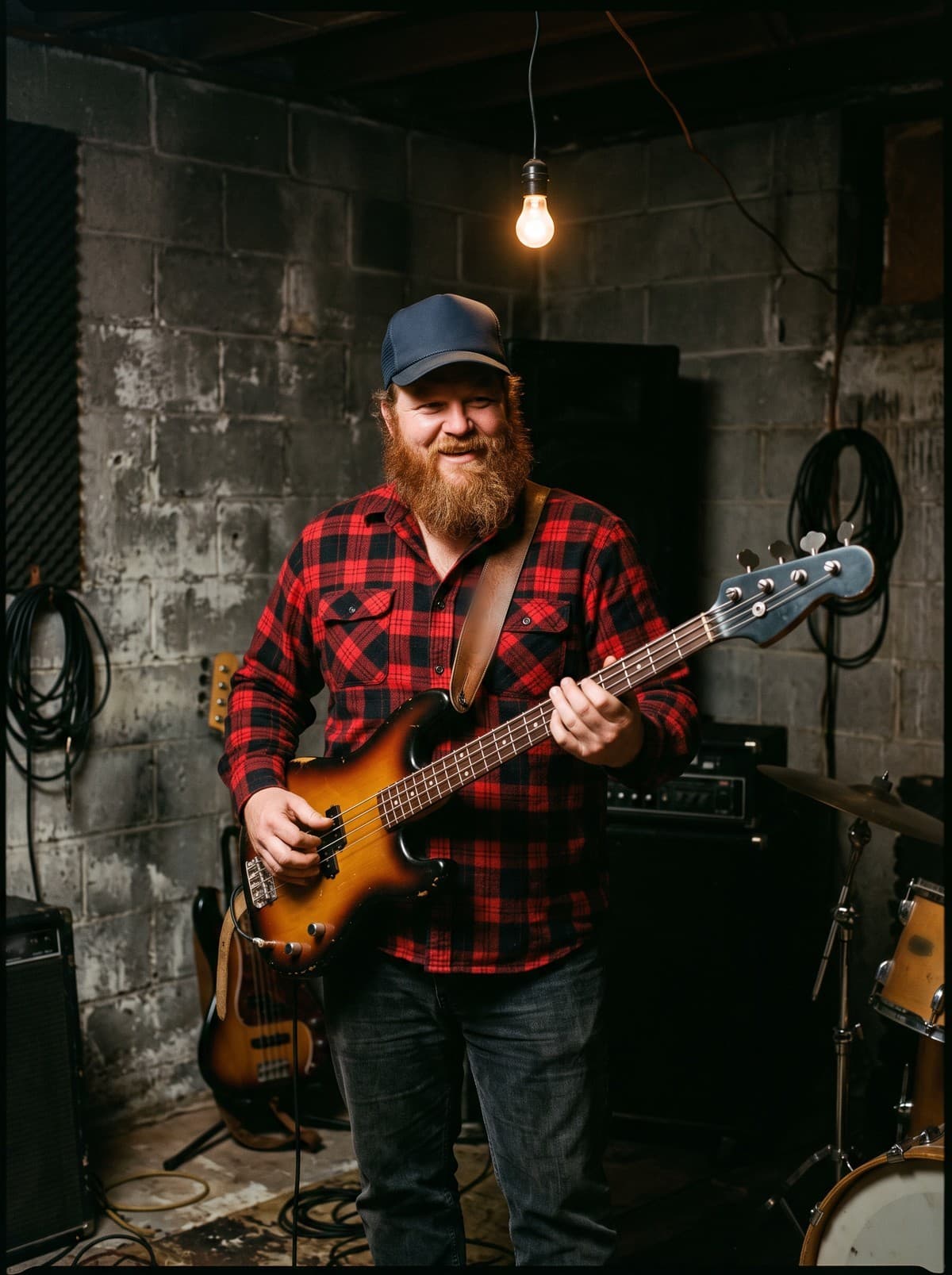
    Wade Tolliver drove long-haul out of Amarillo from 1967 to 1978. He sang at dances on his weekends home. Dolores Ochoa had played pedal steel in Hereford and Lubbock dance halls since she was sixteen. Buck Riordan played bass in Dumas. Lonnie Fife played drums wherever someone in Dalhart needed a drummer and owned a van that could carry a kit.

    Each of them was hired, separately, for the same wedding dance in Alpine in June 1978. None of them had met. The drive home took seventeen hours, a day at a tire shop in Fort Stockton, and one long argument about the radio that nobody won. The band was agreed on before the argument was settled. The argument was never settled.

  2. The Flatbed

    The Shoulder Lane did not play clubs if it could help it. It played truck stops along I-40, from Tucumcari to Elk City, off the back of a forty-eight-foot flatbed trailer parked at the edge of the lot. The amplifiers were strapped down. The pedal steel was bolted to a sheet of plywood.

    Wade announced each show on channel nineteen an hour before it started. Drivers parked facing the trailer and listened from their cabs, windows down. They did not applaud. When a song ended, they flashed their marker lights. A good night on the east lot at Shamrock looked, from the highway, like a small town switching on.

  3. The Steel

    Dee Ochoa was the best musician in the band, and the band said so in every interview it gave. She arranged all four records. She wrote the turnarounds, set the tempos and decided where the silences went. Wade wrote the words. Dee decided how long the road was between them.

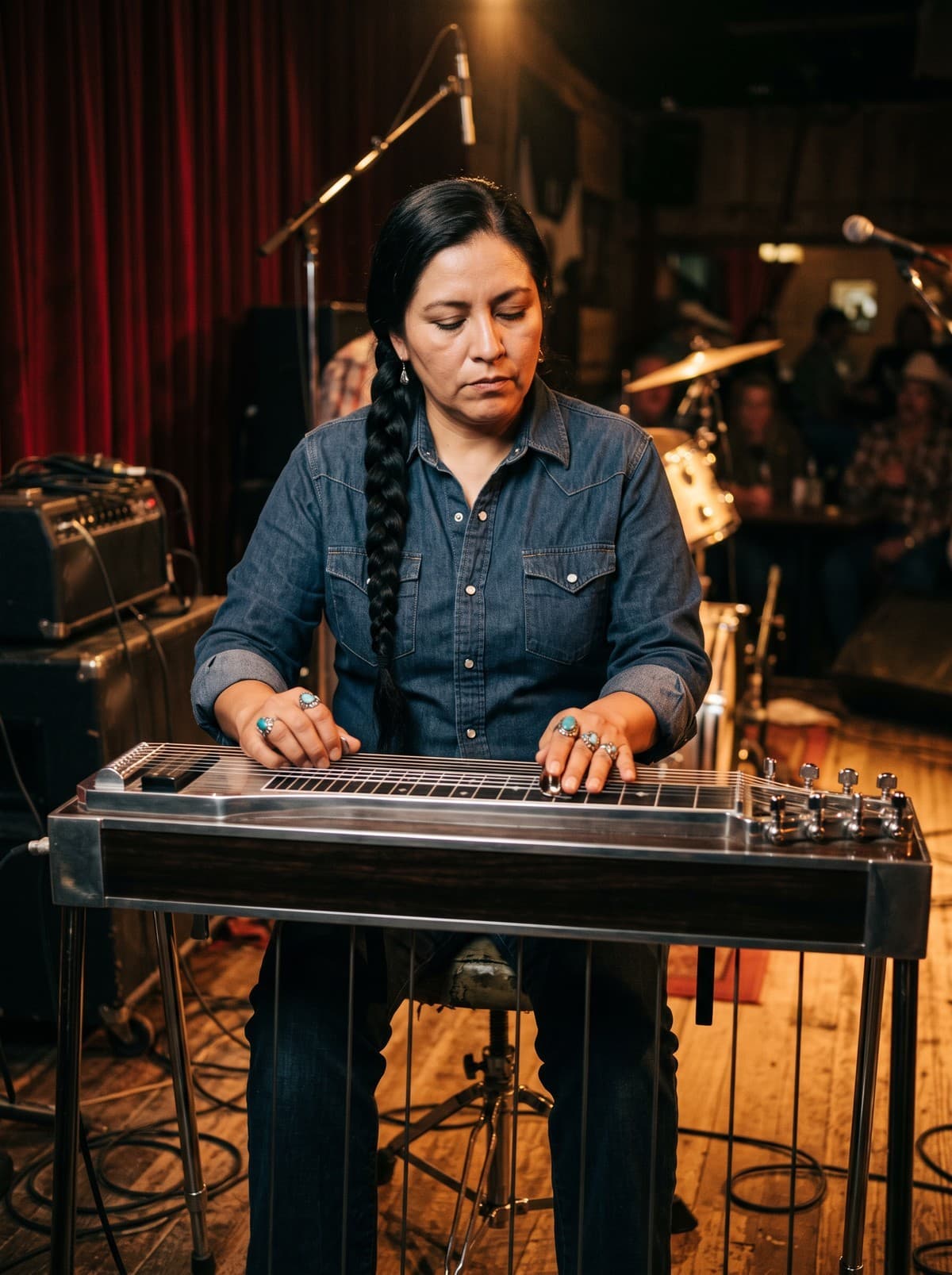
    She played a single-neck, ten-string pedal steel with three pedals and four knee levers, and she tuned it twice before every show, in the wind, by ear. Session players who came through Amarillo to hear her generally stayed for the second set. Several asked for her tuning chart. She gave it to all of them. None of them played it the way she did.

  4. Exit Ramp

    Wade Tolliver drove his last load in the spring of 1986, from Oklahoma City to Amarillo, and parked the truck outside the studio while the band recorded the final song for Exit Ramp. The engine is audible on the tape. Nobody asked him to switch it off.

    The band played its last show that October on the flatbed at Vega, Texas, to forty-one trucks. There was no announcement that it was the last. Wade signed off on channel nineteen the way he always had. The marker lights went on and stayed on longer than usual. Then the lot emptied, one rig at a time, eastbound and westbound.

Road notes

Customs, equipment and one location, as the band kept them.

custom

The Marker Lights

Drivers at a Shoulder Lane show did not clap. They flashed their marker lights at the end of each song, and held them on at the end of the night. The band counted the rigs that answered and wrote the number in the logbook beside the date. The highest count on file is sixty-three, at Elk City, Oklahoma, in 1981.
equipment

The Plywood

Dee Ochoa's pedal steel was bolted to a sheet of three-quarter-inch plywood so it could not walk on the trailer bed. The plywood went on every date from 1978 to 1986. It was replaced once, in 1983, after the dust storm at Shamrock. The second sheet is the one in the photographs.

mythology

Mile Marker 142

Eastbound I-40, near McLean, Texas. The band stopped there on the way home from every eastern date to change drivers. It is a song on Exit Ramp. It is not a landmark. The band asks that nobody treat it as one.

custom

The Sign-Off

Every show ended the same way. Wade Tolliver keyed the microphone and said, "This is Static, eastbound and westbound, we're gone. Keep the shiny side up." Then he unplugged the guitar. Drivers who heard it more than once say it was never said any other way.

CH 03 · The Unit

Four stations

The band exchanged cards with listeners from 1978 to 1986, the way drivers did. The archive holds one card for each member. They are reproduced front side up.

Wade Tolliver, lead vocals, acoustic guitar
QSLCH 19

Static

Station
Wade Tolliver
Handle
“Static”
Position
Lead vocals, acoustic guitar
Home twenty
Amarillo, Tex.
On the air
1978–1986

Holds the microphone the way he held a CB handset: close, low, thumb ready to let go of the key.

“I drove eleven years. You learn what a song has to do between towns.”

“Ten-four. That's the whole review.”

Now. Lives in Canyon, Texas. Keeps the radio from his last truck on a shelf in the garage. It is still on channel nineteen.

Thanks for the copy · 73s

Dolores Ochoa, pedal steel
QSLCH 19

Dee

Arranger, all four records

Station
Dolores Ochoa
Handle
“Dee”
Position
Pedal steel
Home twenty
Amarillo, Tex.
On the air
1978–1986

Arranged every record. Counted in every song. Never once looked up from the neck to do it.

“The steel is the radio. Everything else is the road noise.”

“I tune before the sound check and after it. Then I tune again.”

Now. Teaches pedal steel in Amarillo. Plays sessions in Fort Worth and Austin. Her students learn the tuning chart before they learn a song.

Thanks for the copy · 73s

Buck Riordan, bass
QSLCH 19

Buck

Station
Buck Riordan
Handle
None given
Position
Bass
Home twenty
Amarillo, Tex.
On the air
1978–1986

“Root and fifth. Root and fifth. It's a long road.”

Now. Runs a tire shop in Dumas, Texas. Carries two spares in his own truck. He has never explained why two.

Thanks for the copy · 73s

Photograph not on file
QSLCH 19

Lonnie

Station
Lonnie Fife
Handle
None given
Position
Drums
Home twenty
Amarillo, Tex.
On the air
1978–1986

“It was my van. I'd like that on the record.”

Now. Drives a school bus in Dalhart, Texas. Holds the speed limit to the mile.

Thanks for the copy · 73s

CH 04 · Logbook

Driver's daily log

One sheet per record. Each line on the grid is a song. The remarks are the record's own. Entries were kept in pencil and are reproduced as found.

Driver's Daily Log

One calendar day · 24 hours

No Radio Signal

Year
1979
Carrier
Hazard Zone Records
Main office
Amarillo, Texas
Sheet no.
1
Songs
10
Total time on record
33:37
  1. 1 Off duty
  2. 2 Sleeper berth
  3. 3 Driving
  4. 4 On duty (not driving)
01020304050607080910
  1. 6
  2. 5.25
  3. 11
  4. 1.75

Remarks

The debut. The high plains had no radio, so they made their own. Recorded in two nights in Amarillo, with the pedal steel tracked last and louder than the engineer advised.

Stops, in order

  1. 01No Radio Signal3:16
  2. 02Amarillo at 3 a.m.3:44
  3. 03Channel Nineteen2:51
  4. 04Tulia, Texas3:08
  5. 05Running Lights3:23
  6. 06Fort Stockton Tire2:42
  7. 07Dee's Waltz3:35
  8. 08Long Way Home from Alpine4:07
  9. 09What's Your Twenty2:59
  10. 10Static on the Line3:52

Driver's Daily Log

One calendar day · 24 hours

Eight Hundred Miles

Year
1981
Carrier
Hazard Zone Records
Main office
Amarillo, Texas
Sheet no.
2
Songs
10
Total time on record
34:03
  1. 1 Off duty
  2. 2 Sleeper berth
  3. 3 Driving
  4. 4 On duty (not driving)
01020304050607080910
  1. 5
  2. 6
  3. 11.25
  4. 1.75

Remarks

One day's driving, as the drivers told it. The title is a distance. The archive makes no finding as to the hours.

Stops, in order

  1. 01Eight Hundred Miles3:34
  2. 02Front Door, Back Door3:06
  3. 03Sleeper Berth4:01
  4. 04Coffee and a Logbook2:48
  5. 05Caprock3:50
  6. 06Shiny Side Up2:57
  7. 07Weigh Station Open2:38
  8. 08Panhandle Rain4:12
  9. 09Steel at Midnight3:18
  10. 10Home Twenty3:39

Driver's Daily Log

One calendar day · 24 hours

The Emergency Lane

Year
1983
Carrier
Hazard Zone Records
Main office
Amarillo, Texas
Sheet no.
3
Songs
9
Total time on record
32:15
  1. 1 Off duty
  2. 2 Sleeper berth
  3. 3 Driving
  4. 4 On duty (not driving)
010203040506070809
  1. 7
  2. 4.75
  3. 10.75
  4. 1.5

Remarks

Songs from the strip of pavement beside the road. Slower than the first two records. Dee Ochoa's arrangements leave room between the lines, and the band holds still in it.

Stops, in order

  1. 01The Emergency Lane3:53
  2. 0275 Miles Per Hour (Decision Window)3:21
  3. 03Flares3:07
  4. 04Reflector Red3:29
  5. 05Waiting on a Part4:22
  6. 06Dust on I-403:15
  7. 07Hazard Lights2:54
  8. 08Dee's Second Waltz3:48
  9. 09Pull Off Slow4:06

Driver's Daily Log

One calendar day · 24 hours

Exit Ramp

Year
1986
Carrier
Hazard Zone Records
Main office
Amarillo, Texas
Sheet no.
4
Songs
8
Total time on record
29:51
  1. 1 Off duty
  2. 2 Sleeper berth
  3. 3 Driving
  4. 4 On duty (not driving)
0102030405060708
  1. 8
  2. 4.75
  3. 9.75
  4. 1.5

Remarks

The final album. They pulled over. Eight songs, the last one recorded with the engine of Wade Tolliver's final truck idling in the parking lot outside.

Stops, in order

  1. 01Exit Ramp3:37
  2. 02Last Load3:58
  3. 03Fifty-Five3:02
  4. 04Groom, Texas3:25
  5. 05Turning In the Logbook3:46
  6. 06The Lot at Closing3:19
  7. 07Mile Marker 1424:00
  8. 08Signing Off4:44

CH 05 · Mile Markers

Eight Hundred Miles Tour, 1981

Nine dates on I-40, 1981, from Tucumcari, New Mexico to Elk City, Oklahoma, opening and closing at home. Every show was played from the flatbed.

  1. 01

    Amarillo, TX

    Flatbed, east lot. Opening night.

  2. 02

    Groom, TX

  3. 03

    Shamrock, TX

    East lot.

  4. 04

    Elk City, OK

    Sixty-three rigs. Highest count on file.

  5. 05

    Clinton, OK

  6. 06

    Tucumcari, NM

    Westernmost date.

  7. 07

    Santa Rosa, NM

  8. 08

    Vega, TX

  9. 09

    Amarillo, TX

    Home twenty. Closing night.

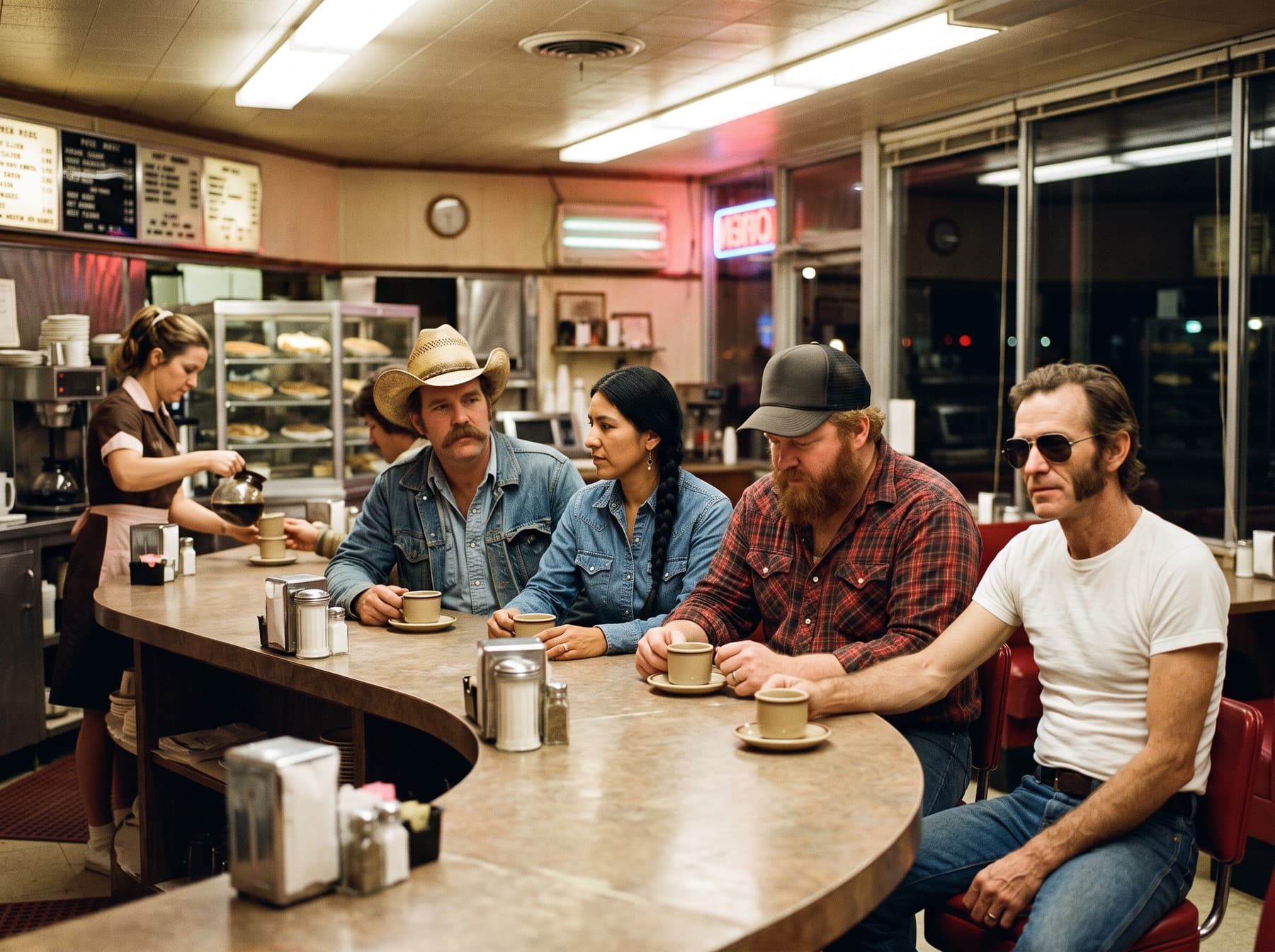
The band seated at a curved diner counter late at night, a waitress pouring coffee
Amarillo at 3 a.m. Coffee after the closing night, 1981.
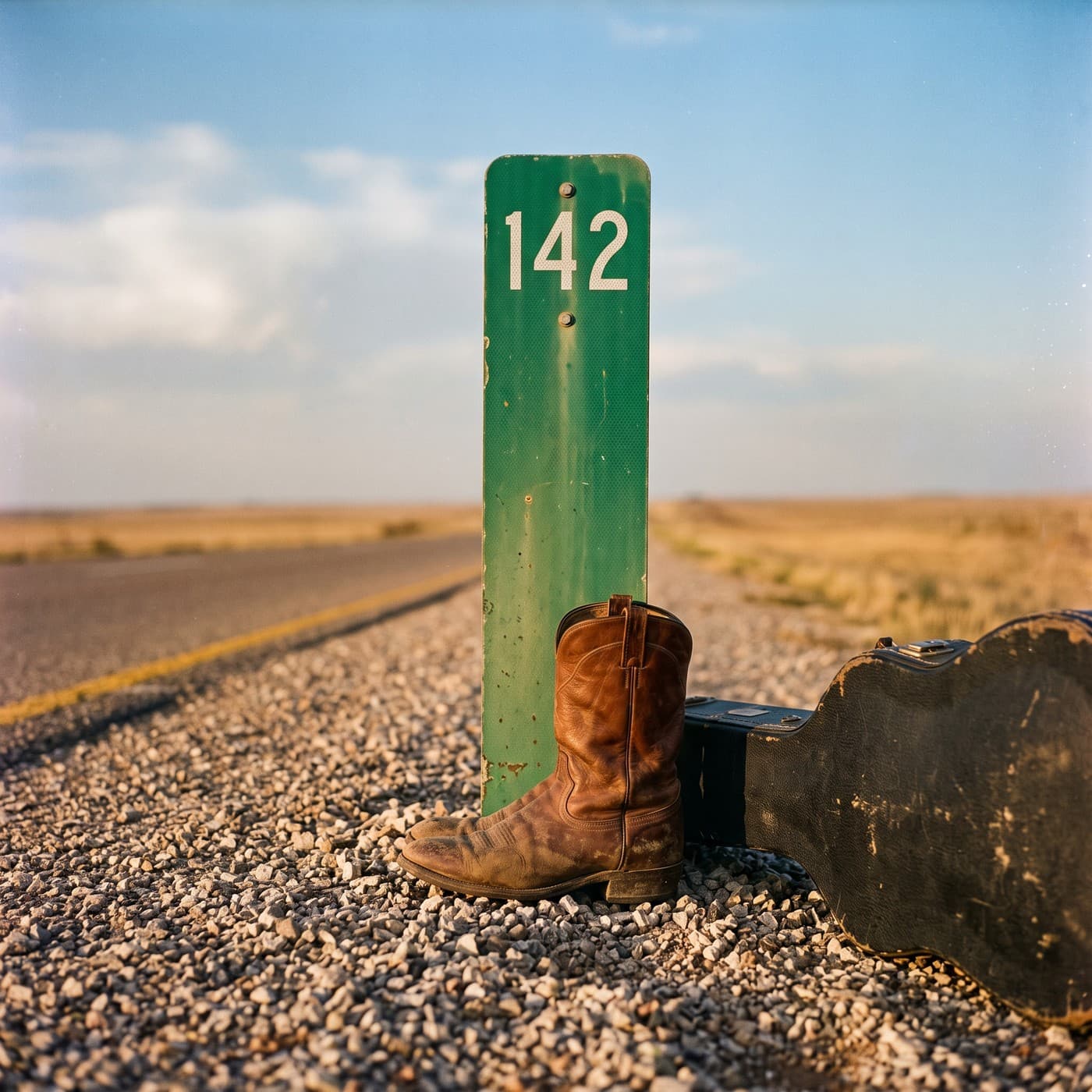
A worn cowboy boot and a battered guitar case resting against a green highway mile marker numbered 142
Mile marker 142, eastbound, near McLean. Where they changed drivers.

CH 09 · Reports

Incoming on channel nine

Three incidents, one newspaper clipping and the cards that came back. Entered without amendment.

Road report1982

The Letter from the Commission

Twenty: Amarillo, Texas

Copy: A letter arrived from the Federal Communications Commission concerning music on channel nineteen. The band stopped putting a microphone near the radio.

Full report

For two seasons the band set a CB handset on the flatbed beside the monitor, keyed open, so drivers parked at the back of the lot could hear the set through their own radios. In March 1982 a letter arrived at Wade Tolliver's address from the Federal Communications Commission. It noted that channel nineteen was not to be used to transmit music. Wade read it aloud on channel nineteen that evening, in full, without accompaniment. After that the handset stayed in the cab. Drivers at the back of the lot moved closer.

Road report1983

The Dust Storm Set

Twenty: East lot, Shamrock, Texas

Copy: A dust storm came over the lot in the second set. The drivers turned their headlights on the flatbed. The band finished.

Full report

On a night in April 1983, a dust storm came in from the southwest during the second set at Shamrock. Visibility on the lot dropped to a few yards. The stage lights were not strong enough to reach the band. One driver switched his headlights on and aimed his rig at the trailer. Within a minute, twenty more had done the same. The band played seven more songs in the beams. Dee Ochoa retuned twice. Nobody left.

Road report1985

The Weigh Station

Twenty: I-40, near Adrian, Texas

Copy: The flatbed, with the band's equipment strapped on, was weighed. It was under. The officer asked for a song anyway.

Full report

In 1985 the flatbed was pulled into a state weigh station west of Amarillo with the whole show strapped down on it. The load was weighed and found to be well under limit. The officer on duty walked out to the trailer, looked at the pedal steel for some time, and asked whether it was a working instrument. Dee Ochoa played him the first half of "Steel at Midnight" from the trailer bed. He waved them on before the second half. The band considers that a review.

The High Plains Hauler · November 1981

The Band in the East Lot

An Amarillo four-piece plays to drivers who never leave their cabs

By R. Pruett

You hear about The Shoulder Lane on channel nineteen before you see them. Wade Tolliver comes on an hour out and gives the exit and the lot. By the time you pull in there is a flatbed at the far end with a band on it and thirty rigs already parked facing it, nose in.

Tolliver drove eleven years before he quit to do this full time. He still talks like a driver. The songs are about the distance between towns and what you think about while you cover it. The bass and drums keep the speed. The pedal steel, played by Dolores Ochoa, does everything else. More than one driver in the lot told this paper she was the reason he came.

Nobody claps. When a song ends, the marker lights go on all across the lot. Tolliver says ten-four into the microphone and counts into the next one. Ochoa has usually started it already.

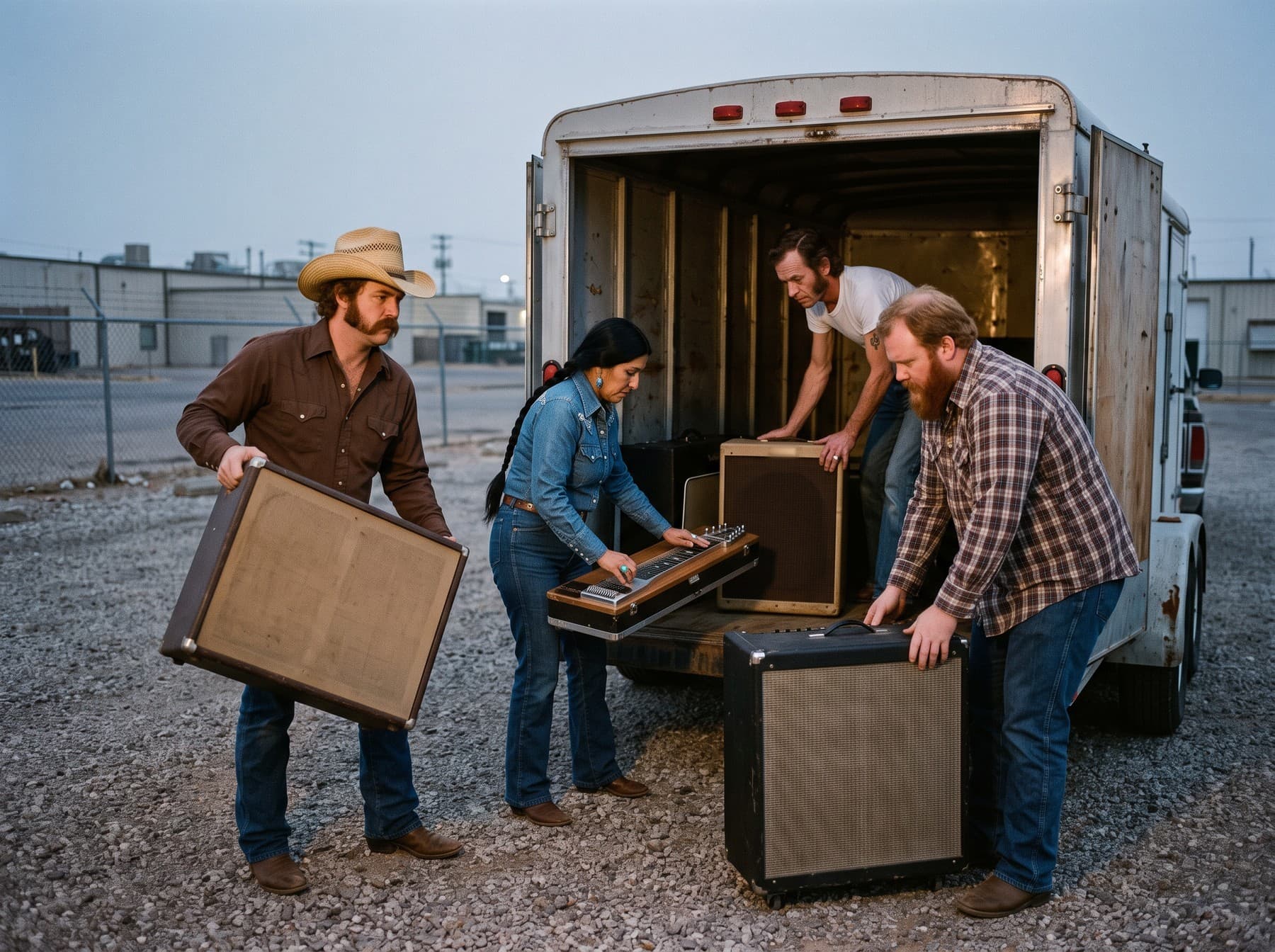
The band loading amplifiers and a pedal steel into an open cargo trailer on a gravel lot at dawn
Loading out at dawn. The pedal steel goes in last and comes out first.

Cards received

Listener cards, returned to the band. Signal reports as written.

Thanks for the copySignal 5 by 5

Drove thirty-one years. Heard them four times from the cab at Shamrock. Flashed my lights every song. The steel player is the best I ever heard, and I heard plenty.

D. Haskell, retired driver · Clinton, OK

Thanks for the copySignal 5 by 5

My father kept No Radio Signal in the truck. When the dial went quiet past Tucumcari, he put it on. I still do the same thing on the same road.

M. Esparza · Santa Rosa, NM

Thanks for the copySignal 5 by 5

I was at the dust storm show. We turned our headlights on them. I have never been more sure I did the right thing.

J. T. Burkhalter · Pampa, TX

Services

Next right

Shirts and printed matter are issued through the Sideband Label stores. Each one ships folded, flat and strapped down.

Fuel not available at this exit.

Front

Breaker one-nine. Band in the lot.

Back

Keep the shiny side up.

The Shoulder Lane · Amarillo, Texas · 1978–1986 · Played from the flatbed